2-time gold medalist Kristin Faulkner talks 1-on-1 with Alaska’s News Source
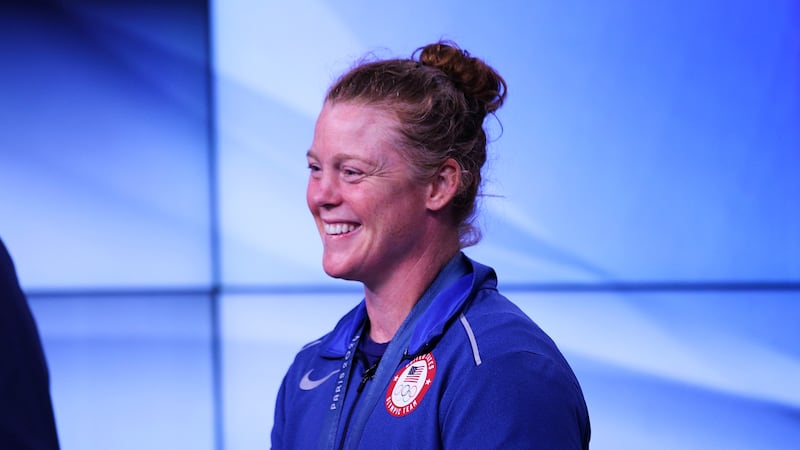
ANCHORAGE, Alaska (KTUU) - As she prepares to head to the Tour de France Femmes, Homer-raised Kristen Faulkner told Alaska’s News Source during a wide-reaching 1-on-1 conversation that she has not fully grasped the last whirlwind week, which included becoming Alaska’s only double Olympic gold medalist.
“It definitely hasn’t sunk in,” the 31-year-old Faulkner said. “I think, you know, it was like, one race and then another race, and then media. And I think maybe tonight or tomorrow morning, I’ll be able to relax and let it sink in.”
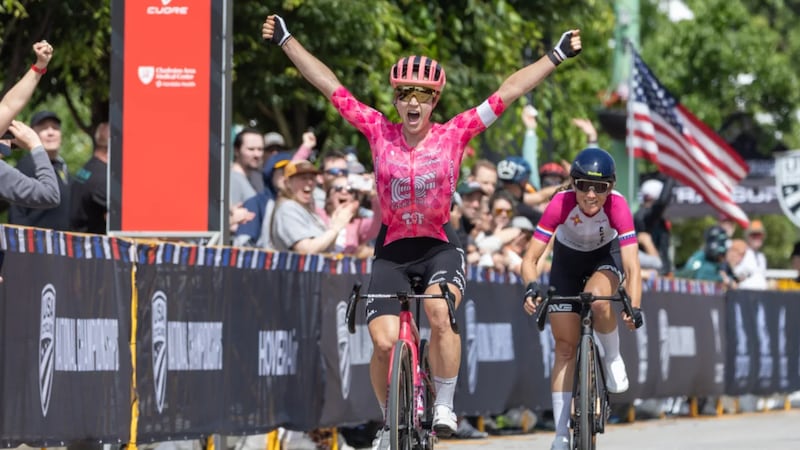
On Sunday, Faulkner delivered a stunning performance to finish first in the women’s road cycling event. Just three days later, she secured another gold medal when Team USA defeated New Zealand in the women’s team pursuit finals.
One thing she is certain of — she’ll be taking her medals to the Tour de France Femmes because she wants to show them to her teammates.
“They already have some scratch marks on them from like hitting each other, because there’s two of them,” Faulkner said.
“In the middle of it, it’s a piece of the Eiffel Tower ... and then the back is actually a really cool design as well. They did a really good job ... and the bottom has the name of the event,” Faulkner said. “So each metal is slightly different because it has the name of the event.”
The road to her double-gold medal performance at the Paris Olympics was a long and arduous one, but she said her parents, Sara and Jon Faulkner, “believed in me before anyone else did.”
“To the outside world I think it seems like this journey is a bit of a fairy tale story,” she explained. “It’s like, ‘She left her job and went to the Olympics.’ And it seems like there weren’t a lot of bumps in the road, and the reality could not be more different.
“I went through injuries. I went through setbacks. I wasn’t selected for the Tokyo (2020 Olympics) team, even though I really wanted to be. I missed out on the time trial selection this year. I’ve gone through depression and come out of it. You know, as a bike racer, I moved across the world where I didn’t know anybody, and picked up a new job that my friends and family knew nothing about, and I was moving to a place I didn’t know anybody, was pretty much on my own those first few years.
“And so, I think for my parents, they’ve seen the really bumpy, dark road and hard road that led to it, and I think that gave them a lot more emotions than most people because they really saw me persevere and have so much resilience to come through those moments. And so I think for them to see it all work out for me was just really, really amazing for them.”
Faulkner said her parents saw her work through rehabilitation last summer in Homer, following an injury sustained in a biking accident. Faulkner said she could have trained anywhere in the world, but she wanted to be home.
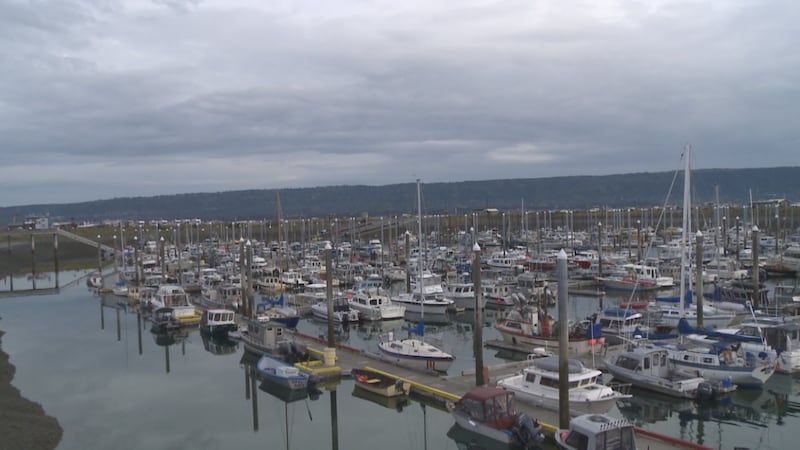
“Homer is my favorite place in the world,” she said. “It’s where I grew up. It’s where I had my earliest childhood dreams. My parents still live there. The house I grew up in is still there.
“When I race during the season, I actually can’t be in Homer, because all my races are in Europe. They’re a week apart. It’s not feasible to fly 30 hours each way. And so I really have to live in Europe for most of the year.
“I just wanted to be around the people I love, the people who support me and my community.”
Faulkner says that she probably won’t be able to make it home to Alaska until Christmastime because she has a lot more work to do.
That includes the Tour de France Femmes, which kicks off Monday.
As Faulkner said, her “fairy tale” story was paved with blood, sweat, and tears. And while she may have left her job as a venture capitalist to pursue her Olympic dreams, her former profession still influences her current one.
“I think I’ve always been an analytical person, even before my former job. I’ve always been someone who ... is willing to take small risks or big risks, someone who likes to be all in and fully dedicated to something I do,” she explained. “And I think venture capital is a pretty risky industry, in the sense that you’re investing in early-stage startups, and many of them could fail, but when they do win, and they do work out, they have 10x returns, you know? And so it’s kind of a high-risk, high-reward industry, and I think my attacking nature on the bike is similar to that.”
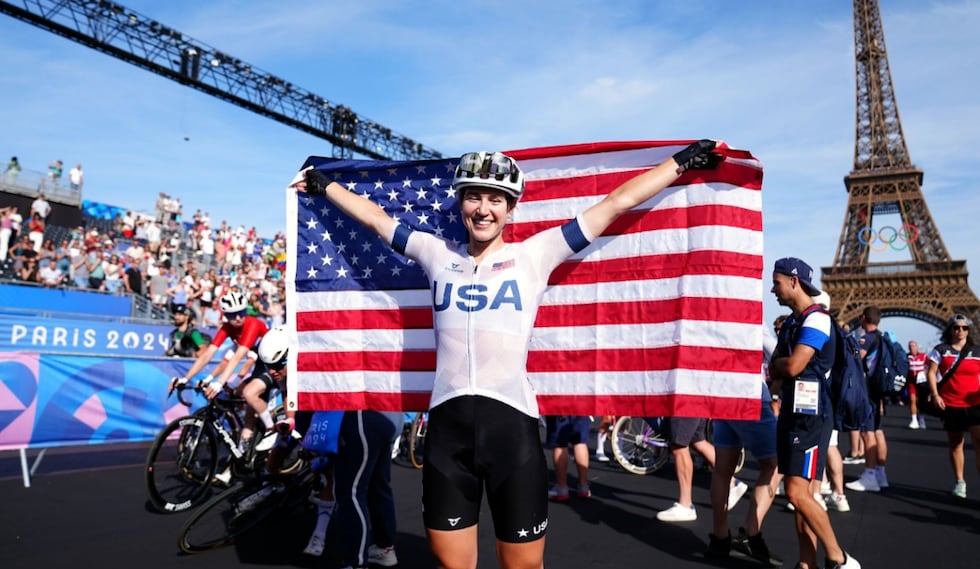
Her attacking nature on the bike helped secure her gold medal in road cycling. She decided to compete in the event just the night before.
“I went back and forth whether I would do it or not, primarily because I had team pursuit two days later and the road race would be a massive effort, and I wanted to make sure that if I did it, I would be fully recovered for team pursuit,” Faulkner said. “The reason for that is just that I knew we had gold medal potential in team pursuit, and I also knew that I was the least experienced on the team.”
While the world may have been stunned by her performance, Faulkner was not.
“The moment we hit the front group, I said this is the time to go. This is when everyone’s most tired. They’re not expecting it,” Faulkner explained. “And so when I was with [Belgian cyclist] Lotte Kopecky and we were approaching the front two, I said, as soon as we catch them, I have to go.
“It’s like now or never. It’s all in. Don’t look back. Don’t doubt yourself, like you have one shot to win this race, and that’s it. And I had to do it because I’m not a fast sprinter, and so I knew that I would get beat if we all went to the line together.”
She has a signature move — the attack. And it worked to perfection on Sunday.
“Honestly, people keep saying they were surprised by it, but it’s something I’ve done over and over. It’s how I won nationals, it’s how I’ve won many races. And so I don’t know why anyone was surprised. You know, that’s, that’s my signature move, and I think the front people expected it, but they just didn’t have the legs to follow.”
Three days later, she’d lock down her second gold, a feat no other Alaskan can boast.
To folks young and old, looking up to her, she says there is no dream that’s too big.
“I think no one would have thought that I could have gone to the Olympics, let alone win two gold medals in an event that I started in my 20s, you know, a sport that I learned in my 20s,” she said. “I think Alaskans are just cut out a bit different. I think we’re tough. I think we’re resilient. I think we’re quite independent, just being, you know, a little bit off the grid as a state. And I think that resilience and toughness really shows in sports.
“I think that resilience to be an Olympic athlete, it’s not about just working hard. It’s about coming back from setbacks. It’s about playing the long game and focusing on the daily improvements, where you get no validation and no recognition and still moving forward for years and years and years.
“And that’s the part of the story a lot of people don’t see.”
Tour de France Femmes is next and she’s not slowing down after that, as she’s set to compete in more team pursuit races.
“I really enjoy the track,” she stated. “I think it really helps with my road racing. It really pushes your VO2 systems, physiologically, and clearly, the track training really helped in my road race.
“I want to go win a world championship on the track. We have the world championships coming up. And yes, the goals don’t stop ... someone asked me if I’m still motivated, and yes, I’m definitely still motivated. So that didn’t change because of the Olympic medals.”
Still a small-town Alaska girl at heart, she’s now a world-renowned cyclist and her remarkable story is still being written.
Copyright 2024 KTUU. All rights reserved.