Alaska saw less seismic activity in 2023 compared to 2022
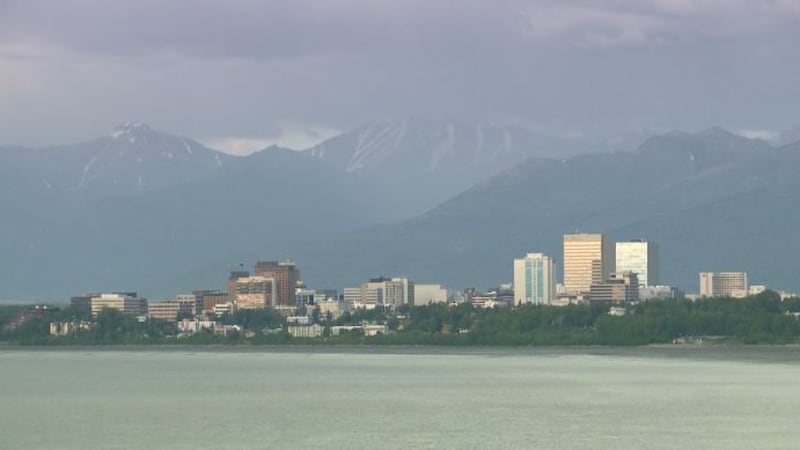
ANCHORAGE, Alaska (KTUU) - Despite having about 1,500 fewer seismic events in Alaska than the year before, officials say the 2023 earthquake count was not extraordinary.
“It was, you know, on par or maybe slightly lower than average,” Elisabeth Nadin with the Alaska Earthquake Center said.
A new report from the center details the state’s quakes in 2023, which numbered about 45,500. Experts with the center said anything less than 50,000 earthquakes is a quiet year.
Since Alaska’s record year of 2018, when roughly 55,000 quakes took place, the state’s seismic activity has been decreasing as aftershocks wane from a few different big quakes.
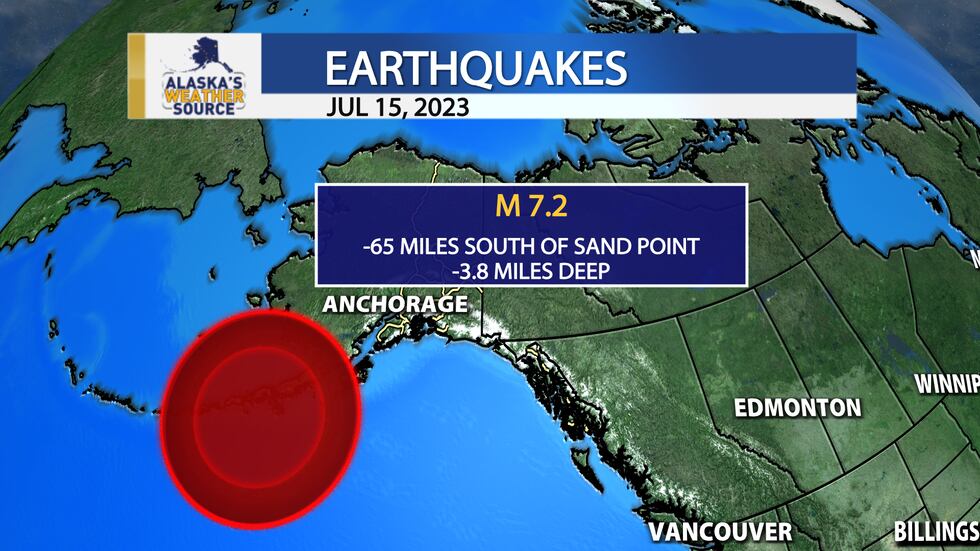
According to the report, the largest quake detected last year was a magnitude 7.2 south of Sand Point on the Aleutians. It was an aftershock from 2020′s magnitude 7.8 Simeonof quake nearby.
The largest quake in mainland Alaska was a 5.4 in the lower Cook Inlet region on March 19, 2023.
Of the total number of earthquakes detected in 2023, almost 600 (about 1%) were considered aftershocks of the 7.1 earthquake that rocked Southcentral on Nov. 30, 2018. That averages out to about 11 of the quakes each week.
Natalia Ruppert, the senior seismologist at the earthquake center, said experts expected the 2018′s earthquake’s aftershock activity to have died down by now. But she said how long aftershocks continue depends on many factors, like the type of earthquake, the type of fault and the stress around and along the fault.
“Since we cannot look at the fault from [the] 2018 earthquake because it was 30 miles below the surface, we have to make some assumptions about the fault,” Ruppert said. “So, we don’t know exactly if it was a preexisting fault or if it was a new structure.”
She said if it’s a new fault, then it might take longer for the full surface to adjust back to the normal background level, or the earthquake frequency in that area before the big earthquake happened.
The earthquake center says in 2023 it improved its ability to detect quakes that aren’t necessarily earthquakes, like those coming from glaciers, landslides and volcanic activity. Those events are included in these numbers.
Copyright 2024 KTUU. All rights reserved.