Seward High School student offers alternative to road brine
‘I just want to make the world a better place, and this is my first step.’
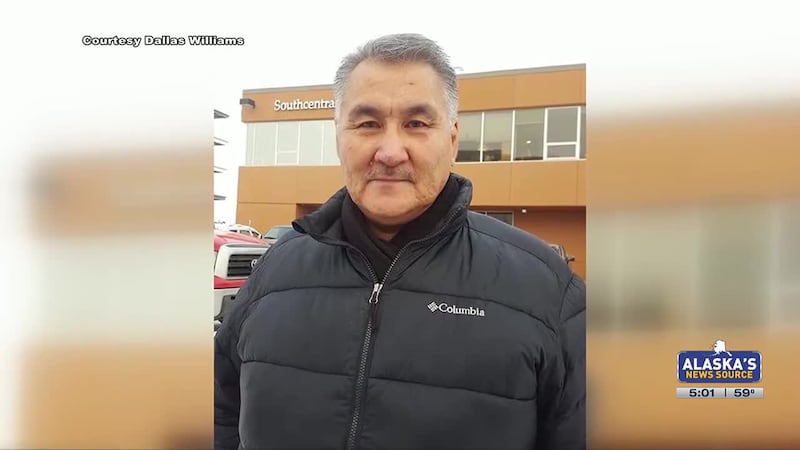
ANCHORAGE, Alaska (KTUU) - Since 2023, Mike Arnold has been at the forefront of a petition calling for the end of a salt brine solution on winter roads on the Kenai Peninsula.
The gathering of signatures started with local mechanics in the region.
“I couldn’t believe the response. It was like they were just up in arms about the whole thing,” said the organizer of the petition, Mike Arnold.
Within one day, Arnold said he had gone to about 20 shops and amassed a total of 60 signatures from industry professionals who agreed with his assessment that the mixture had been damaging vehicles in the Kenai-Soldotna area.
He then determined it was time to take his petition to the local branch of the Alaska Department of Transportation. After two weeks of waiting, Arnold eventually called them.
“The Superintendent up there said, ‘Just go wash your car,‘” Arnold said.
It was at that point that the petition kicked off in full, and in only five months, he had gathered close to 6,000 signatures, and by October, the Kenai Peninsula Borough had taken notice.
“We had 80 people that got up and testified of what it was doing. Everyone from mothers that had their doors, their sliding doors on their vans, were coming open while they’re going down the road at 50 miles an hour, having kids in the van, to mechanics explaining how this stuff is destroying the brake systems of cars,” Arnold explained.
So far, residents of the Kenai Peninsula have had limited reductions on the use of brine, including a resolution by the Borough urging DOT to provide a study conducted on salt brine solutions and their impacts on vehicles and the environment.
Now, a new solution is being presented by Seward High School Student Hannah Leatherman, who won the “Caring for the Kenai” environmental contest.
“I did an alternative to using salt brine on the asphalt or roads,” Leatherman said.
The alternative she researched is called graphite nanoplatelets.
“It’s just carbon atoms, and they have these heating additives in them that not only increase the melting rate of ice molecules, but also reduce the freezing rate of water molecules,” Leatherman explained.
There has been limited testing for the alternative, only being used in China and Northeast England. She said that her research began looking into moose being injured in the area, only to find that the underlying cause had been the salt brine solution.
“I found out that a lot of those crashes are actually caused by the moose being attracted to the salt brine they use on the roads,” Leatherman said.
Leatherman said that going into her research, she knew about the negative impacts of the salt solution.
“It increases the soil erosion and causes corrosion,” she said.
She said she knows the solution she is offering will be more expensive in upfront cost, but will become cheaper over time as roads stay in stable condition for longer.
“The initial price is definitely more expensive, but it’s going to reduce the cost of how much we have to repair roads by like 35%. So, it costs way less than having to use the salt brine. It just amazes me how we’re still using this product when there are different ways we could be fixing the environment,” Leatherman explained.
Both Arnold and Leatherman want to see the new alternative explored by DOT and hope that change comes soon for the roadways in the Kenai Peninsula.
“If this technology is truly what it sounds like to me, then there’s no reason why they shouldn’t. They should jump all over it,” Arnold said. “If we’re going to repave all the roads or top them off with this or however they do it, it’s gonna be expensive, but at safety, you know, do we consider safety or money?”
“I hope that they’ll realize that this is a way better and more economically sustainable, and a safe way to get rid of a lot of issues that we have in our community. So, I hope that they’ll be persuaded by my proposal,” Leatherman said.
As for what comes next for Leatherman and her research, she said she’d like to partner with GraphiteOne, an Alaska-based company with control over one of the largest graphite deposits in the world, and take her research beyond Seward.
“I just want to make the world a better place, and this is my first step,” Leatherman concluded.
See a spelling or grammar error? Report it to web@ktuu.com
Copyright 2025 KTUU. All rights reserved.