ANSEP leader: Sudden summer academy cut amid part of federal DEI crackdown
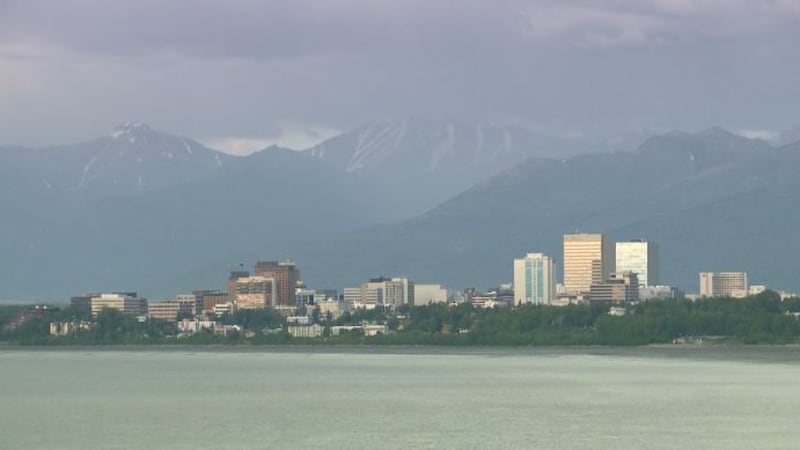
ANCHORAGE, Alaska (KTUU) - The chief operating officer for ANSEP — the Alaska Native Science and Engineering Program — said she suspects the unexpected loss of a $2.5 million National Science Foundation grant that forced the cancelation of its longstanding summer Acceleration Academy allowing rural students to come to Anchorage for free STEM education has to do with a Jan. 20 Trump Administration executive order.
“It’s very frustrating,” ANSEP’s Michele Yatchmeneff said. ”We’ve had other federal funding that is being looked at and on pause or being targeted."
“We also had other federal funding that continued to go through and there’s no reasoning behind that. And so we’re just going forward as we would in any case if we ever lost funding and try to continue to get more funding to replace it.”
In the order, titled “Ending Radical And Wasteful Government DEI Programs And Preferencing” the Trump Administration calls for the termination of “discriminatory programs, including illegal DEI and ‘diversity, equity, inclusion, and accessibility’ (DEIA) mandates, policies, programs, preferences, and activities” within educational institutions.
Following that order, Yatchmeneff said the University of Alaska Board of Regents asked ANSEP to clarify through its website programs that were open to any student as part of a larger campus-wide effort to change affirmative action language.
Yatchmeneff said the language changes were in response to the order, including AI programs being used to look through websites targeting certain words and phrasing.
Despite those phrasing changes, however, Yatchmeneff said there are no changes to the program itself, including the name and its mission to serve Alaska Native communities.
The Trump administration has not returned Alaska’s News Source’s request for comment.
Wayback Machine archives show the words “Alaska Native” being removed from ANSEP’s website.
In January, just prior to the EO, under the website’s “About” tab, it read, “ANSEP’s objective is to effect systemic change in the hiring patterns of Alaska Natives in science and engineering by placing our students on a career path to leadership. Our goal is to provide an excellent education and a life of unlimited possibilities for every Alaskan … Nearly 2,500 Alaska Native middle school students, high school students, and university students are involved.”
But in February, the language was changed to read, “ANSEP’s objective is to provide outstanding educational opportunities and a life of unlimited possibilities for every student in Alaska … Nearly 2,500 Alaska middle school students, high school students, and university students are involved.”
As of May, the “About” section reads, “Our program is rooted in Alaska Native values, and we continue to celebrate and share Alaska Native culture as a key component of our program. ANSEP is available to every student in Alaska.”
Yatchmeneff said the National Science Foundation’s official explanation for the sudden ANSEP cut was that it was part of a 50% cut across the entire National Science Foundation system.
”For me, what’s super sad is that we at the University, ANSEP, have been getting this grant since 2001,” Yatchmeneff said.
“We’ve been working with the same staff there for many, many years and to see that whole department close and see all the great work that they were doing — not only with ANSEP but across the nation — it’s very sad to see and very frustrating. I hope, like us, that they’re going to continue to do what they’re doing and hopefully go after their funding to keep that momentum going.”
ANSEP still plans to hold all of its other scheduled programs this summer and has stated that the funding loss does not impact the full-time Acceleration Academies in Anchorage, Mat-Su, Bethel, Kotzebue, or Nome.
In the last three years, Yatchmeneff said UAA, along with its other campuses, has been working on Alaska Native success initiatives, and as a result of those efforts, each campus has seen an increase in Alaska Native Student enrollment.
“We want our Alaska Native and all of our students to know that they can become scientists and engineers, [and] know that they can become what they want, but also ... feel like they’re welcome here and make decisions for our state and be at the table when we are making those decisions,” Yatchmeneff said.
Despite the recent cut in funding, Yatchmeneff said ANSEP remains optimistic for the future with plans of expanding into Nome, and through continued efforts to secure new funding sources, is confident its summer Acceleration Academy will be offered once again in 2026.
In an email to Alaska’s News Source, UAA spokesperson Jonathon Taylor said that only a small percentage of UAA’s $270 million federal portfolio has been canceled or frozen to date.
“Each [canceled] or frozen grant is disappointing; we continue to advocate for retaining our federal grants and are working with our congressional delegation and granting agencies to do so,” Taylor stated. “ANSEP remains strong and well-supported throughout the community, and we’re confident that there is enough financial cushion to weather the turbulence at the federal level.
“The University remains committed to supporting ANSEP, our Alaska Native Success Initiative (ANSI), and all of the Alaska Native students, staff, and faculty at UA.”
See a spelling or grammar error? Report it to web@ktuu.com
Copyright 2025 KTUU. All rights reserved.