Roadtrippin’ 2024: Riding the Alaska Railroad to historic Curry townsite
ANCHORAGE, Alaska (KTUU) - Many Alaskans have never heard of Curry, a once thriving railroad town that was destroyed by fire in 1957. But back in its day, Curry was both a rest stop and a destination for passengers on the Alaska Railroad.
Situated halfway between Seward and Fairbanks, Curry became the place Alaska Railroad trains powered by coal steam engines stopped to refuel, and where passengers and railroad workers spent the night. In 1923 the railroad built the Curry Hotel, which was considered incredibly luxurious for its day.
“The Curry Hotel had 47 rooms to start out with and eventually 75,” said Jesse Weigle of Mahay’s Jet Boat Adventures. “Most of them had noiseless radiator heaters and hot and cold running water, which for 1923 was a luxury.”
People can get to the Curry townsite on the Alaska Railroad’s Hurricane Turn/Flagstop Train. Mahay’s also offers a River, Rail and Trail excursion that includes a tour of Curry. While there isn’t much to see there now, the site is rich in history for both the hotel and the community that grew around it.
“The highest census for this place was about 300 people,” Weigle said. “Most of them, if not all of them, worked for the railroad in one capacity or another. They had their families here. They had their spouses here. There were schools. There were homes. There was a creamery. Yes, it was a fully functioning town.”
Curry was also a popular destination for people who liked to fish and recreate in the remote area, and at one point included a golf course, tennis courts, and a ski slope. But as diesel engines eventually replaced steam engines, the railroad no longer had to stop in there to refuel, and the number of people visiting Curry dwindled.
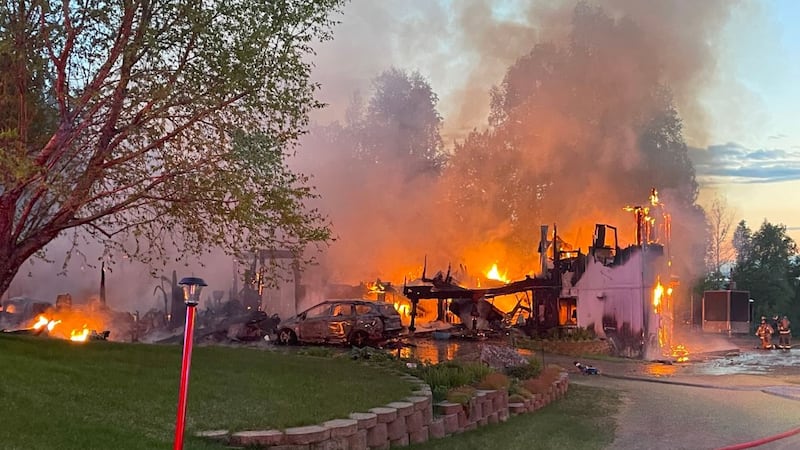
In 1957, a fast-moving fire destroyed the Curry Hotel, and the railroad razed the rest of the structures. The town of Curry was no more.
Today visitors can tour some of the abandoned rail cars on the site, see artifacts from the town, as well as some of the concrete that was the foundation for the hotel. Mostly though, they learn about the history of a place that was once vital to the Alaska Railroad — a town that lived and died, but is not forgotten.
Copyright 2024 KTUU. All rights reserved.